
Start with what your lawn needs before winter
Utah’s summer heat often leaves lawns with thin grass, compacted soil, or brown patches. Fall gives grass time to recover, but colder weather limits when you should tackle certain tasks.
Good seasonal lawn care starts with identifying what your yard needs. This checklist will help you decide what to address before winter and what to wait until spring. Keep reading to learn more.
Utah lawn care schedule: September through November
The timing of fall lawn care depends on local temperatures and how your grass responds as the season changes. This Utah lawn care schedule outlines the main tasks to focus on from September through November.
| When | What to focus on |
| September | Aerate compacted areas, overseed thin turf, fertilize where appropriate, and treat actively growing weeds. |
| October | Reduce irrigation, continue mowing, clear leaves, and winterize sprinklers before damaging freezes. |
| November | Finish leaf cleanup, make the final mow, and consider applying late-season fertilizer while the grass is still growing. |
The Northern Utah Turfgrass Management Calendar from Utah State University puts cool-season overseeding in August and September. It also identifies September as a fall aeration window. Watch local forecasts, especially along colder bench neighborhoods.
Fall lawn care checklist: Eight tasks before winter
1. Aerate if your soil shows signs of compaction
If water runs off instead of soaking in, or foot traffic has left the ground hard, your lawn may benefit from core aeration. The machine removes small plugs of soil so water reaches roots more easily. September offers a good window while cool-season grass grows.
If your yard drains well and the soil isn’t compacted, you may not need aeration. Regular lawn maintenance helps you monitor soil conditions and address problems as they develop.
2. Overseed thin grass early enough
Late summer and early fall offer good conditions for repairing thin stands of Kentucky bluegrass or tall fescue. Choose a seed that matches your lawn and prepare the surface so the seeds touch the soil. Aim to sow four to six weeks before the expected first frost.
If October has arrived, check the forecast before proceeding. New grass needs steady moisture during germination, even as established turf needs less water.
3. Fertilize according to your lawn’s needs
Fall growth helps cool-season lawns recover from summer stress. Fertilizer supports that growth, but extra product won’t fix poor irrigation or dead grass.
Measure the lawn and follow the fertilizer label. Utah State University recommends soil tests every few years to guide phosphorus and potassium choices. Its calendar highlights September and November for cool-season fertilization. Don’t fertilize once your lawn has stopped growing.
4. Address perennial weeds while they’re growing
Fall allows homeowners to treat actively growing dandelions and other broadleaf weeds. Identify the plant first, then choose a suitable product and follow its label.
If you’re overseeding, check the label for waiting periods. Some herbicides interfere with new grass. A few weeds may need only spot treatment. When weeds keep returning, look at the thin turf and bare soil rather than treating only the leaves.
5. Cut back on watering as temperatures cool
Your lawn usually needs less water in October than it did in July. Shorter days and cooler weather lower demand, so reduce watering frequency and check soil moisture before running sprinklers. Account for rainfall too.
While the system runs, inspect each zone for leaks and uneven coverage. Fresh seed still needs regular moisture while germinating. These seasonal lawn care checks also reveal problems before the winter shutdown.
6. Keep mowing while the grass grows
Cool-season grass often keeps growing after mornings turn cold. Mow when needed and remove at most one-third of the blade in a pass.
Gradually lower the cutting height for the final mow rather than scalping the grass. Shorter turf reduces the risk of snow mold, as snow flattens long blades against the soil. Collect heavy clumps of clippings so they don’t smother the lawn.
7. Clear leaves before they pile up
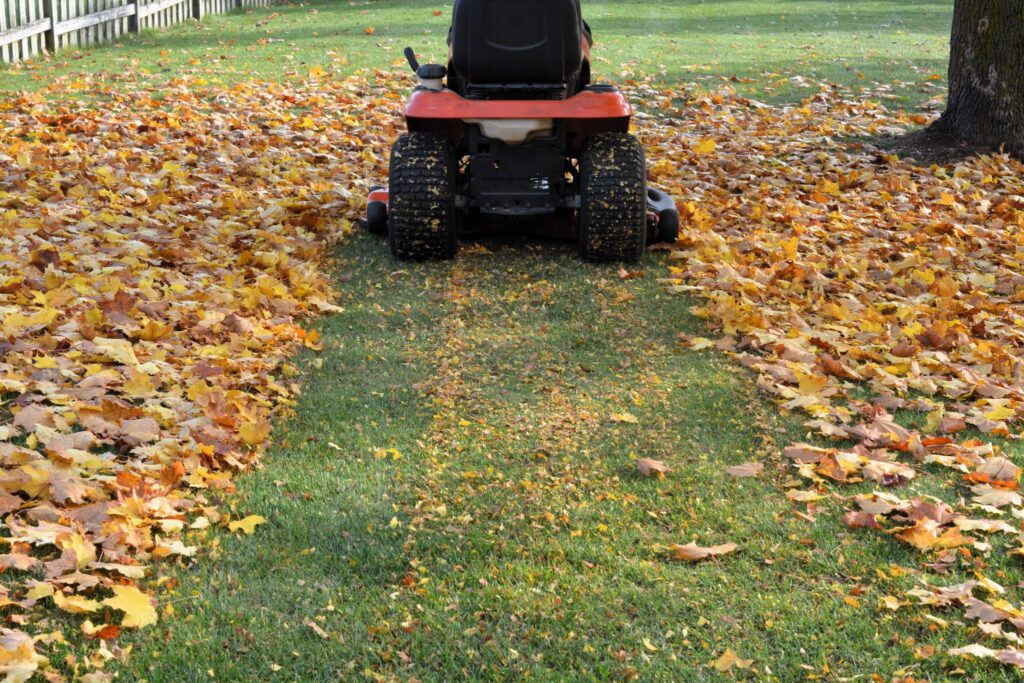
Use a mower to shred light layers of dry leaves into the turf. When leaves form a thick blanket, rake them up before they block sunlight or trap moisture.
Check beneath mature trees, especially after windy days. Pick up fallen branches before snow arrives. Your spring cleanup will also be easier when you clear heavy debris now.
8. Winterize sprinklers before a damaging freeze
When water remains in irrigation lines, it may freeze and crack pipes or backflow components. Turn off the water supply and drain each zone using the method your system needs. Some systems use drain valves; others require a professional blowout.
Utah State University’s irrigation system maintenance guidance explains the differences. Don’t guess at compressor pressure or assume every line drains on its own. Schedule sprinkler winterizing before temperatures threaten the system.
What if your lawn still has brown patches?
Before you reseed or fertilize brown patches, take a closer look at what might be causing the damage:
- Dry patches: Run sprinklers and look for gaps in coverage.
- Puddles: Check whether compacted soil or grading causes runoff.
- Thin edges: Look at foot traffic and heat from adjacent pavement.
Examine the roots and soil before choosing a fix. Grass that greens up as temperatures cool may have been dormant, while dead turf needs repair. Good seasonal lawn care starts with identifying the problem.
Common fall lawn care mistakes to avoid
Even experienced homeowners occasionally miss the timing. Watch for these mistakes:
- Overseeding too late: The seed needs enough warm soil and growing time before frost.
- Following summer watering settings: Check soil moisture rather than running the same schedule into October.
- Applying fertilizer without measuring: Follow the label and avoid treating damaged areas blindly.
- Waiting for a hard freeze to winterize: Shut down the irrigation system before cold weather threatens its components.
Frequently asked questions
Is October too late to aerate or overseed in Utah?
Aeration may still make sense early in October if the grass is actively growing and soil conditions allow. Overseeding becomes riskier as the first frost approaches. Use the Utah lawn care schedule as a guide, but pay attention to your neighborhood’s forecast.
When should I stop watering my lawn?
Reduce watering as temperatures fall and check whether the soil actually needs moisture. Dry weather may still call for occasional irrigation before winterization. Grass with fresh seed needs frequent moisture until it establishes.
Do all sprinkler systems need a blowout?
No. Some systems drain through properly placed valves, while others trap water and need compressed air. Check your system design or ask an irrigation professional before choosing a winterization method.
Should I aerate every fall?
Not necessarily. Look for compaction, slow infiltration, or heavy traffic before scheduling aeration. Healthy soil that absorbs water well may not need annual treatment.
Prepare your yard for winter with All Seasons Landscaping
The right fall lawn care plan depends on your soil and irrigation system. Repair your lawn while the grass is growing, then protect your sprinklers before freezing nights arrive.
If your yard needs aeration or cleanup, or you’re unsure about shutting down the sprinklers, contact All Seasons Landscaping for a free estimate. We’ll look at your property and help you decide what makes sense before winter.